 Muttmates
How to judge a dog park before you let your dog off
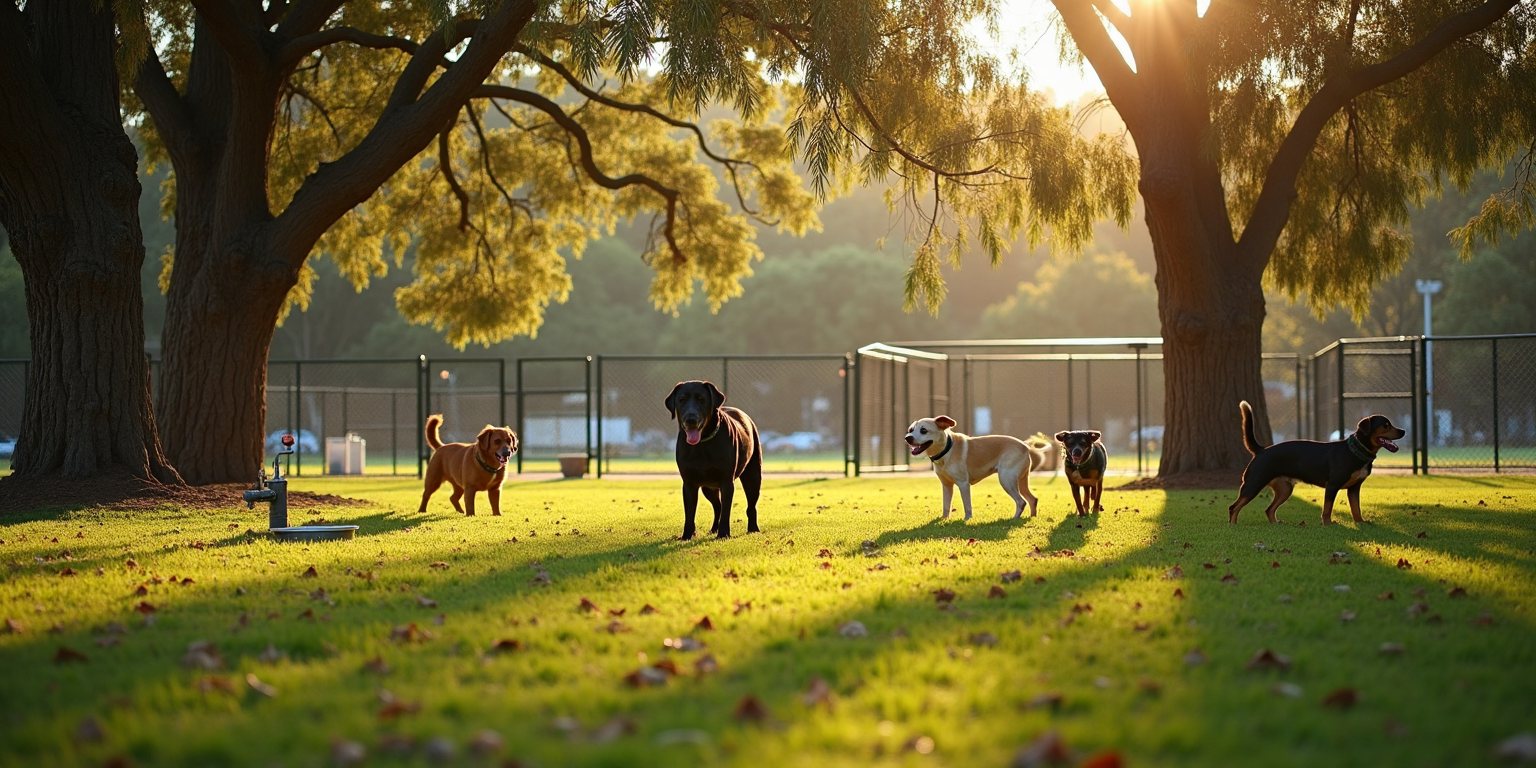
Australia has more off-leash dog parks than most people realise. We track over a thousand of them on Muttmates, and they range from brilliant to best avoided. The listing tells you a park exists. Whether it suits your dog is a different question, and you can answer most of it before you get in the car. Here is what we look for, in the order we look for it.
Fencing first, and what "fenced" actually means
For a lot of owners the fence is the whole decision. A recaller with a solid "come" can use an open oval; a young dog, a sighthound or a new rescue needs a boundary. But "fenced" covers a lot of ground. Some parks are fully enclosed with double-gated airlock entries, some have a fence on three sides and a creek on the fourth, and some have a knee-high rail that a determined kelpie treats as a suggestion. If the fence matters to you, check the park's page for what members have noted, and if nobody has said, assume nothing. The first visit is a reconnaissance trip: lead on, walk the boundary, then decide.
The entry tells you about the exits
A double gate, where you step into a small holding pen and close one gate before opening the next, is the single best piece of dog park design there is. It stops the classic bolt: your dog slipping out while someone else's is coming in. Parks with a single gate straight onto a car park deserve more caution, especially at busy times. Park as close as you can, and have the lead on before the gate, not after.
Water, shade and the time of day
A tap and a bowl sounds like a small thing until February. Plenty of parks have no water at all, so we carry our own as a default. Shade decides when the park is usable in summer: a bare paddock is a 7am park, a park under old gums works at midday. The time of day also decides who you meet. Early mornings tend to be the regulars with well-run dogs. After school and after work are the crowds. If your dog is new to parks, go at a quiet time first and let it learn the place before it learns the pack.
Read the park before you unclip
Stand at the gate for a minute before you go in. You are looking for three things: how many dogs, how they are playing, and where the owners are. A few dogs in loose, loopy chase with owners walking among them is a good park having a good day. A tight knot of dogs around one that is trying to leave, with owners on their phones at the far bench, is the same park having a bad one. There is no prize for going in. Come back in half an hour, or walk the outside of the fence as a warm-up.
Etiquette that keeps you welcome
- Pick up every time. Nothing closes a dog park faster than complaints to council, and nothing causes complaints faster than what gets left behind.
- Recall and re-grip. Call your dog back now and then, hold the collar for a beat, reward and release. A dog that only gets grabbed when it is time to leave learns to stay out of reach.
- Toys and food are optional extras. Some dogs guard balls and some owners hand out treats to every dog in reach. Neither ends well in a crowd. Read the room before you produce either.
- Your dog, your job. If your dog is flattening a puppy or hounding a dog that wants out, the fix is a lead, not a shrug of "they'll sort it out".
Rules are local, and signs beat websites
Off-leash areas are set by local councils, and every council writes its own rules: hours, on-leash times, dog limits, and areas within a park that stay on-leash. Those rules change, too. Whatever any website says, including ours, the sign at the gate is the current law of that park. Read it the first time you visit, and glance at it now and then after that.
Browse every off-leash park by state
Park facilities change and councils move boundaries. Treat every listing, here or anywhere, as a starting point, and the signage at the park as the final word.
Common questions
Are off-leash dog parks free to use?
Yes. Off-leash parks are public land managed by local councils. Some councils require dogs to be registered, and each park sets its own hours and conditions on the signs at the gate.
How do I find off-leash dog parks near me?
Muttmates lists over a thousand off-leash parks across every Australian state and territory, each with its own page and map. Browse by state at muttmates.au/dog-parks/ or open the app and search your suburb.
Can my dog be off-leash anywhere else?
Only in designated off-leash areas. Everywhere else in public, leash rules apply, and dogs are banned from national parks altogether. The sign at the park is the current rule for that spot.